Brake Problems in Surrey? Start With What You're Feeling.
Brake symptoms can range from routine wear to conditions that should not be driven on. How the pedal feels, what you hear, and how the vehicle responds are important clues. Tell us what your brakes are doing and we'll help you understand what may be happening and what your next step should be.
What are your brakes doing right now?
That single question changes the path. How the pedal feels, what you hear, and how the vehicle responds are important clues — but they're not a diagnosis. Safety comes before conversion.
Tell us what your brakes are doing
One question at a time. The result gives you an urgency level and a next step — it never claims to diagnose your vehicle. Safety overrides conversion; testing confirms the actual cause.
Brake Guide
One question at a time · safety first · never a diagnosis
What are your brakes doing right now?
Brake symptoms are a safety issue first
Some brake conditions should not be driven on. Use these urgency groups to decide your next move — and call us if you're unsure. Possible cause is not a confirmed diagnosis.
Do not continue driving
Pedal to the floor, a soft or low pedal with reduced braking, grinding with reduced braking, smoke or severe heat from a wheel, or a red brake light with a low pedal. Stop safely and arrange inspection or towing. Darcy's does not provide towing — arrange it separately.
Seek prompt inspection
An ABS light with a normal pedal — standard braking still works, but anti-lock won't during a hard stop. Drive carefully and book soon. If a red brake light appears or the pedal goes low, treat it as stop-driving.
Book a brake inspection
Squealing, steering-wheel shake when braking, pulling, longer stopping distance, or a slight pedal change. Braking performance may appear normal, but these warrant inspection rather than waiting.
Your brakes depend on many parts working together.
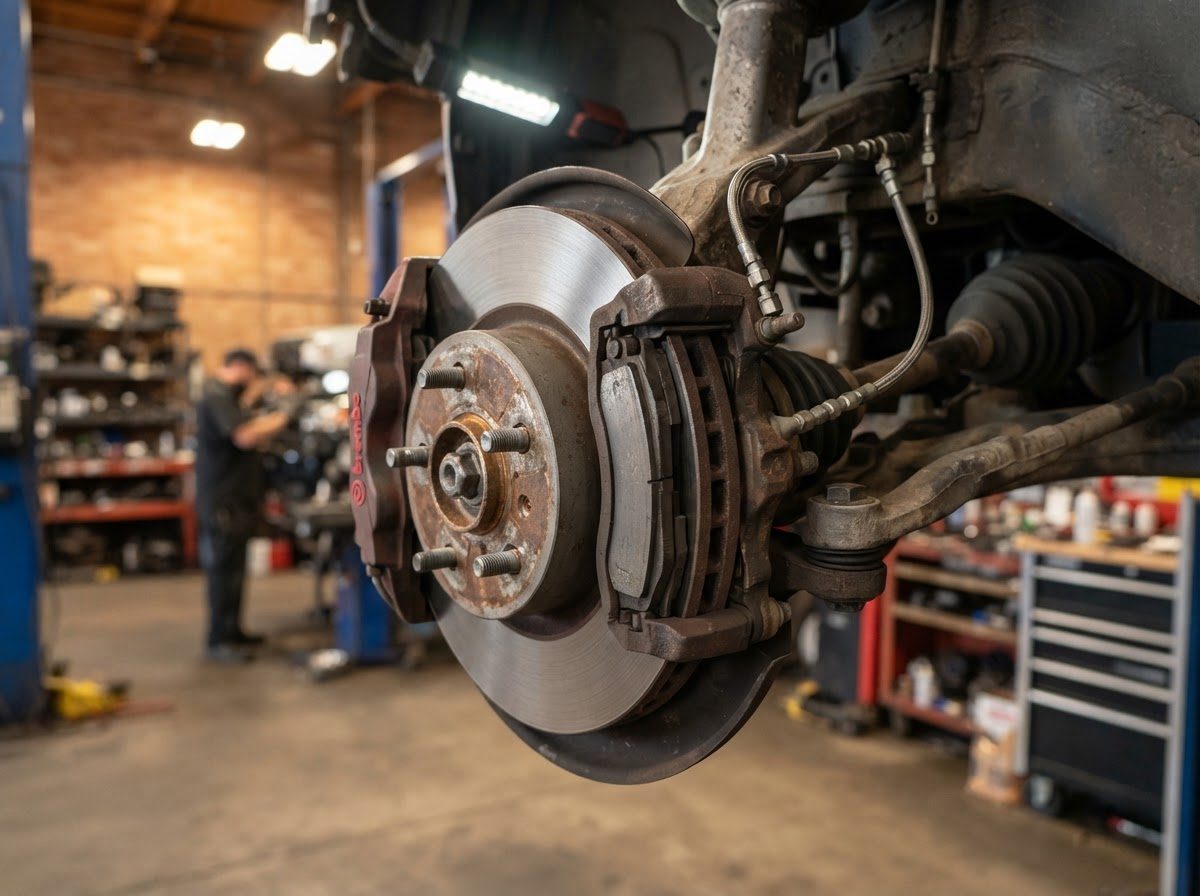
A vehicle's braking system depends on multiple components working together — pads and shoes, rotors and drums, calipers, the hydraulic system, brake fluid, the master cylinder, hoses and lines, and ABS-related components. A change in any one can affect how the brakes feel, sound, or stop.
The symptom narrows the investigation, but it doesn't confirm which component has failed. Inspection and testing are what find the actual cause — we never guess.
The braking system — at a glance
Brake pads / shoes
Rotors / drums
Calipers
Hydraulic system
Brake fluid
Master cylinder
Hoses / lines
ABS-related components
The symptom is a clue — not a diagnosis
What you feel and hear helps a technician decide where to start testing. It never confirms the cause on its own.
Squealing
Friction-material wear or another brake condition can create noise, but noise alone does not confirm the cause. It often means pads are near the end of their service life.
Grinding
Grinding deserves prompt attention and can indicate contact or wear that should be inspected. Metal-to-metal contact damages rotors quickly and reduces braking.
Soft / Spongy Pedal
Unusual pedal feel can relate to several hydraulic or mechanical conditions — air, a leak, or a master-cylinder fault. A significant loss of pedal feel should be assessed before driving.
Vehicle Pulls While Braking
Uneven braking or other suspension, tire, or brake factors may contribute. An inspection separates a brake cause from tire or steering causes.
Pedal or Steering-Wheel Vibration
Braking-system, wheel, or suspension conditions may contribute. Rotor thickness variation is common, but an inspection confirms the source.
Warning Light
A warning indication tells us the system flagged something — it is not the same as a confirmed diagnosis. We test to find the actual cause rather than assuming the light names the part.
Common categories — not your confirmed diagnosis
These are general categories that can cause brake symptoms. We inspect and test to confirm the actual one before recommending any repair.
Normal friction-material wear
Brake pads and shoes wear over time. Squealing is often an early wear indicator; grinding means the friction material is gone.
Uneven wear or rotor/drum condition
Thickness variation, scoring, or warpage can cause vibration, pulsation, or noise. Inspection confirms which.
Hydraulic issue
Air in the system, a fluid leak, or a master-cylinder fault can cause a soft or low pedal — a potential stop-driving condition.
Fluid loss
A leak at a hose, line, caliper, or wheel cylinder. Low fluid can trigger a red brake warning light.
Caliper-related problems
A stuck or dragging caliper can cause pulling, a burning smell, or uneven pad wear on one side.
ABS / sensor-related faults
An ABS light means anti-lock may be unavailable. Standard braking still works unless a red brake light is also on.
Wheel, tire, or suspension influences
Pulling or vibration while braking can also involve tires, suspension, or steering — not only the brakes.
Heat-related brake conditions
Excessive heat from heavy use or a dragging brake can cause fade, a burning smell, or unusual pedal feel.
Safe things the driver can observe
The details you give us change how fast we find the problem. You don't need technical words — plain description is perfect. Don't crawl under the vehicle or perform any unsafe roadside inspection.
- When did the symptom start?
- Is it getting worse?
- Does the pedal feel different — soft, low, hard, or spongy?
- Does the vehicle pull to one side when you brake?
- Is there noise — squealing, scraping, or grinding?
- Is there vibration in the pedal or steering wheel when braking?
- Is a brake or ABS warning light on?
- Is there a burning smell?
- Is one wheel unusually hot after driving?
- Does it happen every time you brake, or only sometimes?
- Does it appear only at certain speeds or under hard braking?
- Was brake work recently performed?
What happens during a brake inspection?
Driver symptom → braking-performance assessment → visual/mechanical inspection → measurements/testing where required → confirmed finding → repair recommendation. Replacing brake parts based only on noise or pedal feel can lead to incorrect repairs.
Driver symptom
You describe what your brakes are doing.
Performance check
We assess how the brakes feel and respond.
Visual inspection
Pads, rotors, calipers, lines, fluid.
Measure & test
Thickness, runout, hydraulics as required.
Confirmed finding
Testing — not a guess — confirms it.
Match your situation
Each card has useful guidance and an urgency label. Possible cause is not a confirmed diagnosis.
Brakes Grinding
Grinding often means the friction material is worn away and metal is contacting metal, which damages rotors quickly and reduces braking. Move only to reach immediate safety, then arrange inspection or towing.
Brakes Squealing
Squealing is often an early wear-warning indicator. Not an emergency, but pads are likely near the end of their service life — book a brake inspection. Noise alone doesn't confirm the cause.
Soft or Spongy Brake Pedal
A hydraulic issue, air in the system, a fluid leak, or another brake fault can cause a soft pedal. A significant loss of normal pedal feel is a stop-driving condition — don't risk it.
Brake Pedal Goes to Floor
Severe hydraulic loss. Stop safely and do not drive — arrange inspection or towing. This is a potential stop-driving condition, not something to monitor.
Vehicle Pulls While Braking
Uneven braking, a stuck caliper, tire or suspension factors, or brake drag can all contribute. The cause may involve braking, tires, steering, or suspension — book an inspection.
Brake Pedal Vibrates
Pedal pulsation can relate to rotor condition, ABS activation, or another braking-system issue. An inspection confirms the cause. Book a brake inspection.
Steering Wheel Shakes When Braking
Usually rotor warpage (thickness variation) or uneven pad deposit; less often a stuck caliper or a suspension/steering issue. An inspection confirms the cause.
Brake Warning Light On
A red brake light is a safety alert — low fluid, a hydraulic leak, or a parking-brake issue. If the pedal is low or soft, don't drive. Have it assessed rather than assuming the light names the faulty part.
ABS Light On
If the pedal and fluid are normal, cautious driving is possible — standard braking still works, but anti-lock won't during a hard stop. Book soon. If a red brake light is also on, treat it as stop-driving.
Burning Brake Smell
A burning smell or excessive heat from a wheel area can indicate a dragging brake or overheating. If braking is affected or smoke is present, stop safely and arrange assessment.
Longer Stopping Distance
Worn pads, a hydraulic issue, or another brake fault can increase stopping distance. This is a safety concern — book a brake inspection rather than waiting for it to worsen.
Brakes Feel Different After Repair
If brakes feel different after recent brake work, have the work rechecked. New pads can feel slightly different at first, but a soft pedal, pulling, or noise should be assessed — don't assume it will settle.
Clear decision guidance
Plain rules to help you decide. We don't overstate certainty — testing confirms the cause.
If the pedal goes to the floor or braking ability is greatly reduced
→ STOP — do not continue driving. Move only to reach immediate safety, then arrange inspection or towing.
If there is smoke or severe heat from a brake or wheel area
→ STOP — stop safely and arrange assessment. A dragging brake or overheating is a safety concern.
If the brakes grind but stopping remains normal
→ Arrange prompt inspection rather than waiting for it to worsen. Grinding damages rotors quickly even when braking still feels okay.
If the vehicle pulls when braking
→ BOOK an inspection — the cause may involve braking, tires, steering, or suspension. Testing confirms which.
If a brake warning light stays on
→ Have the system assessed rather than assuming the light itself identifies the faulty component. If the pedal is low or soft, don't drive.
If the ABS light is on but the pedal is normal
→ DRIVE WITH CAUTION — standard braking still works, but anti-lock won't during a hard stop. Book soon.
If brakes squeal only sometimes
→ MONITOR and book a brake inspection. Squealing is often an early wear indicator, but noise alone doesn't confirm the cause.
Brake problems in Surrey? Bring it to Darcy's.
We're a proudly father-and-son owned independent repair shop in Surrey, BC. We inspect the full brake system, explain what's worn and what's urgent, and let you decide before any work begins. We don't provide towing; if your vehicle shouldn't be driven, you'll arrange that separately.
Call 604-599-1223Address
Unit 102 – 12465 82 Avenue
Surrey, British Columbia V3W 3E8
Phone
604-599-1223Hours
Mon–Fri: 9:00 AM – 5:30 PM
Saturday: 9:00 AM – 3:30 PM
Sunday: Closed
Brake problem questions, answered
Direct answers first. These are general explanations — testing confirms the actual cause for your vehicle.
Not for normal driving. Grinding usually means the brake pad material is worn away and metal is contacting metal, which damages the rotors quickly and reduces braking performance. Move only to reach immediate safety if necessary, then arrange inspection or towing. This is general guidance, not a confirmed diagnosis.
Ask the Brake specialist
A floating specialist is available on this page (bottom-right, above the red questionnaire). It answers questions based only on this guide and verified Darcy facts — it never claims to diagnose your vehicle.
Look for the orange button in the corner.