
Brake Problems & Brake Repair in Surrey
Brake problems are a safety issue first. Grinding, a soft pedal, or a warning light each mean something different — and some are stop-driving conditions. We inspect the full brake system, explain what's worn and what's urgent, and let you decide before any work begins.
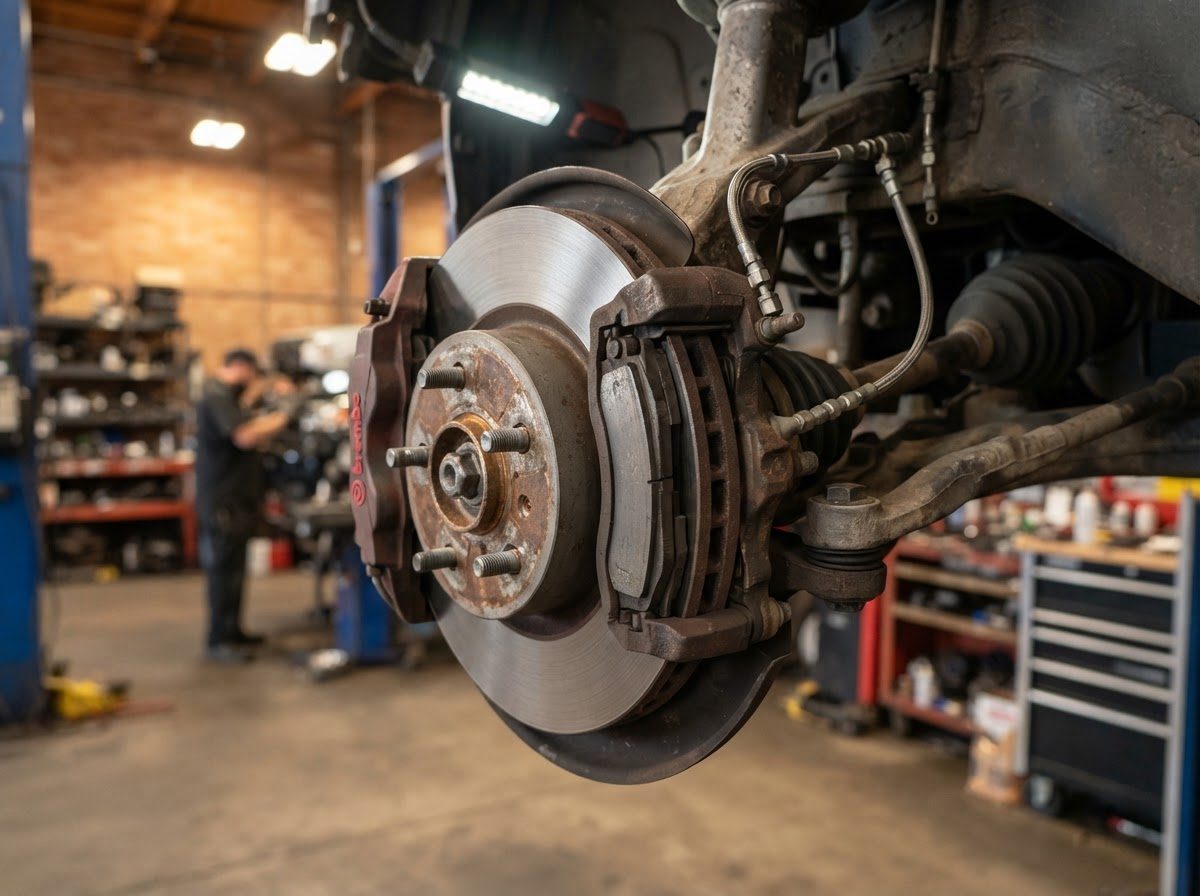
Can I Drive With This?
Safety comes first. Use these urgency levels to decide your next move — and call us if you're unsure.
Grinding, a soft or low pedal, pedal to the floor, or a red brake light — do not drive. Arrange inspection or towing.
ABS light with a normal pedal — standard braking works; book soon, and stop-driving if a red light appears too.
Squealing, steering-wheel shimmy when braking, or longer stopping distance — book a brake inspection.
Slight pedal feel changes — mention it at your next service and don't let it worsen.
What's It Doing?
Pick the symptom that matches what your vehicle is doing. The label tells you how urgent it is. Possible cause is not a confirmed diagnosis — testing confirms it.
Grinding noise when braking
Metal is contacting metal. Don't continue normal driving — move only to reach immediate safety, then arrange inspection or towing.
Soft or spongy pedal
A hydraulic issue, air, or a fluid leak. A significant loss of normal pedal feel is a stop-driving condition — don't risk it.
Pedal goes to the floor
Severe hydraulic loss. Stop safely and do not drive — arrange inspection or towing.
Red brake warning light
Low fluid, a hydraulic leak, or a parking-brake issue. Check fluid level and parking brake first; if fluid is low or pedal is low/soft, don't drive.
ABS light on (pedal normal)
Standard braking still works but anti-lock (and possibly stability/traction) won't during a hard stop. Book soon.
Squealing when braking
Often an early wear-warning indicator. Not an emergency, but pads are likely near the end of their service life — book a brake inspection.
Steering wheel shakes when braking
Usually rotor warpage or uneven pad deposit. An inspection confirms the cause.
Possible Causes
These are common causes — not a diagnosis. We test to confirm the actual one before recommending any repair.
Worn brake pads
Squealing is an early-warning wear indicator; grinding means the friction material is gone and the rotor is being damaged.
Warped rotors
Thickness variation causes a steering-wheel shimmy when braking, usually above a certain speed.
Hydraulic fault or air in the system
A soft or spongy pedal — a fluid leak or air in the lines. A significant pedal loss is a stop-driving condition.
Stuck caliper or brake drag
Can cause pulling, a burning smell, or uneven pad wear on one side.
ABS / hydraulic control fault
An ABS light means anti-lock may be unavailable — standard braking still works unless a red brake light is also on.
Frequently Asked Questions
Not for normal driving. Grinding usually means the brake pad material is worn away and metal is contacting metal, which damages the rotors quickly and reduces braking performance. Move only to reach immediate safety if necessary, then arrange inspection or towing.
Need This Looked At?
Call us and describe what's happening. We'll help you understand what may be going on and what your next step should be — before any work begins.
604-599-1223Unit 102 – 12465 82 Avenue
Surrey, British Columbia
Mon–Fri 9AM–5:30PM · Sat 9AM–3:30PM
Brake Problems in Surrey? Start With What You're Feeling.
A focused decision experience — an interactive brake guide, "can I drive?" urgency groups, symptom cards, and a specialist agent. Safety first; never a diagnosis. We don't provide towing — you arrange that separately.