Brake Service
Grinding, squealing, vibration or a soft brake pedal can have several possible causes. Darcy's inspects the braking system and explains what is found before any repair work begins — because brake symptoms can range from routine wear to conditions that should not be driven on.
Common Symptoms
Squealing or squeaking
Often friction-material wear, but noise alone doesn't confirm the cause. We inspect to find out.
Grinding
Deserves prompt attention — can indicate metal-to-metal contact or wear that should be inspected.
Soft or spongy pedal
A hydraulic, fluid, or air issue is possible. Significant loss of normal pedal feel is a stop-driving condition.
Pedal goes to the floor
A serious hydraulic fault is possible. Do not continue driving — arrange inspection or towing.
Vehicle pulls when braking
Uneven braking, a brake drag, or suspension/tire factors may contribute.
Vibration or pulsation
Braking-system, wheel, or suspension conditions may contribute.
Brake warning light on
The system is flagging a condition. Have it assessed rather than assuming the light identifies the faulty part.
Burning smell or heat
A dragging brake or overheating component is possible. Stop and arrange inspection.
Can I Drive With This?
STOP
Pedal goes to the floor, major loss of braking ability, rapidly increasing stopping distance, visible significant brake-fluid loss, smoke or severe overheating from a wheel/brake area, or severe grinding combined with poor braking. Do not continue driving — arrange inspection or towing. Darcy's does not provide towing; customers arrange it separately.
DRIVE WITH CAUTION
Squealing or light noise with normal braking performance — drive carefully to the shop and book promptly.
BOOK
Persistent noise, vibration, pulling, or a brake/ABS warning light when braking performance otherwise appears normal.
MONITOR
Minor, occasional noise — mention it at your next service. Brake symptoms should not be left uninspected for long.
Possible cause is not a confirmed diagnosis. When in doubt, call us.
What Darcy's Checks
These are the items that may be inspected. We don't claim every component is always tested or replaced — we check what's relevant to your symptom.
- Brake pad and shoe friction-material thickness
- Rotor and drum condition (thickness, runout, scoring)
- Caliper operation and slide-pin movement
- Brake fluid level, condition, and the hydraulic system
- Master cylinder and hoses/lines
- ABS-related components and wheel-speed sensors
- Parking-brake operation
- Overall braking performance and stopping distance
How the Service Process Works
- 1
You tell us what your brakes are doing — the sound, the pedal feel, and how the vehicle responds.
- 2
We assess braking performance and perform a visual and mechanical inspection.
- 3
We take measurements and test components where required.
- 4
We identify the actual cause rather than guessing from the noise.
- 5
We explain our findings clearly before any work begins.
- 6
We discuss options and let you decide. Work proceeds according to the shop's normal process.
Possible Causes & Repairs
These are categories of potential causes — not a confirmed diagnosis. We test to confirm the actual cause before recommending any repair.
Normal friction-material wear
Pads and shoes wear with use. We measure remaining life and report it.
Uneven wear
Can be caused by a sticking caliper, a hardware issue, or driving habits.
Rotor or drum condition
Scoring, runout, or thickness variation can cause vibration or noise.
Hydraulic or fluid issue
Low fluid, air in the system, or a failing master cylinder can cause a soft pedal.
Caliper-related problem
A sticking caliper can cause pulling, uneven wear, or heat.
ABS or sensor fault
A wheel-speed sensor or ABS module issue can trigger a warning light.
Heat-related brake condition
A dragging brake can overheat, causing a burning smell and reduced performance.
Customer Education
Brake pads vs. brake rotors
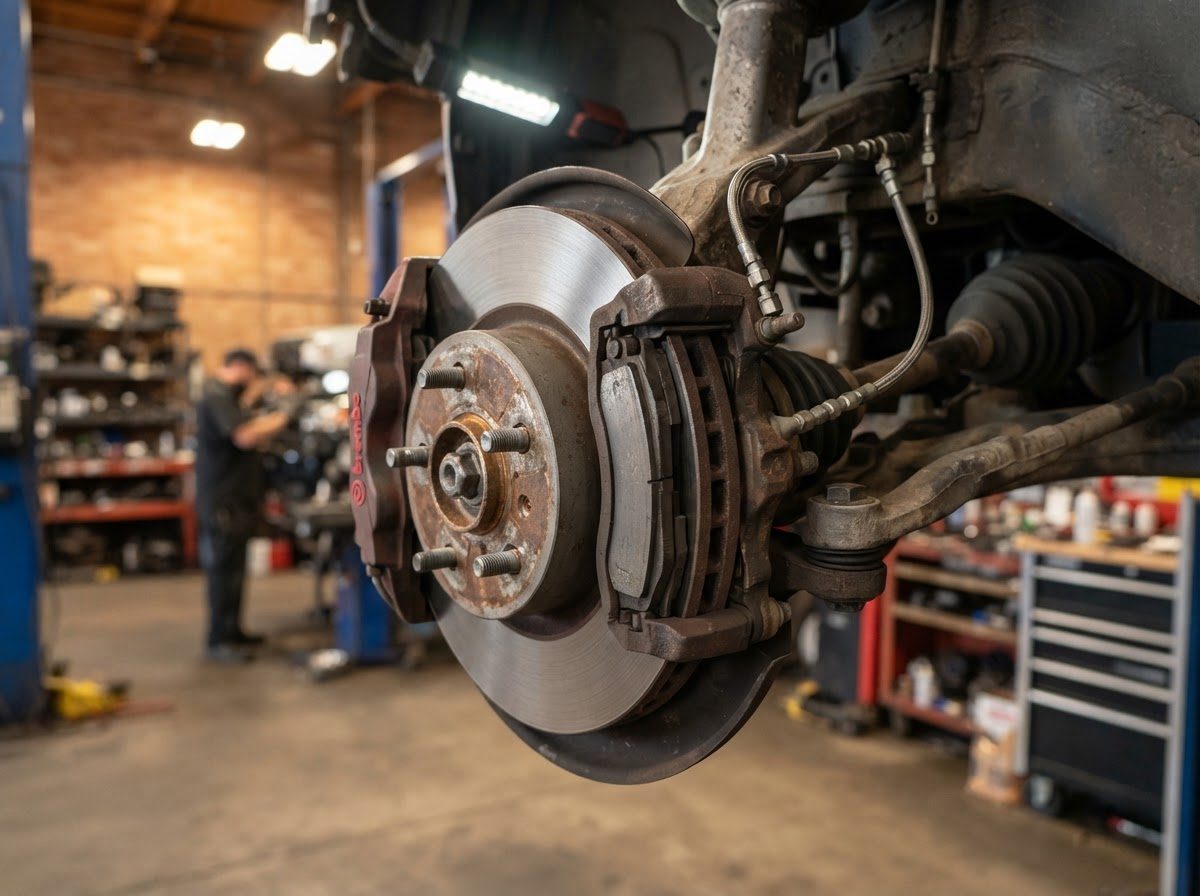
Brake pads are the friction material that press against the rotors to stop the vehicle. Both wear — pads faster, rotors more slowly. Pads can be replaced; rotors may need machining or replacement depending on thickness and condition. We measure both and explain what's actually needed.
Why brakes squeal
Squealing is often a wear indicator built into the pad, but it can also come from glazing, a lack of lubrication on contact points, or moisture. Noise alone doesn't confirm the cause — we inspect to find out whether it's wear, a hardware issue, or something else.
Why brakes grind
Grinding deserves prompt attention. It can indicate metal-to-metal contact when friction material is gone, or debris. Driving on grinding brakes can damage the rotors and reduce braking ability. Arrange inspection rather than waiting for it to worsen.
Why a steering wheel can shake while braking
A vibration or pulsation in the steering wheel under braking is often related to rotor condition (runout or thickness variation), but wheel or suspension factors can also contribute. We inspect to separate the cause rather than assuming.
What causes a soft brake pedal
A soft or spongy pedal can relate to a hydraulic issue, air in the system, low fluid, or a failing master cylinder. Significant loss of normal pedal feel is a stop-driving condition — don't risk it.
How brake wear develops
Brake wear is gradual and depends on driving habits, vehicle weight, and terrain. City driving wears brakes faster than highway driving. That's why we measure and report remaining life at every service — so you can plan ahead instead of being surprised.
Why brake problems should not be ignored
Brakes are a safety system. Small symptoms get worse and can lead to more expensive repairs — a worn pad can damage a rotor, a soft pedal can become a dangerous one. Addressing brake symptoms early is safer and usually cheaper.
Brake Service in Surrey, BC
Darcy's Auto Service is a proudly father-and-son owned independent repair shop at Unit 102 – 12465 82 Avenue, Surrey, BC V3W 3E8. We've served Surrey drivers for 28+ years. Call us and describe what your vehicle is doing — we'll help you understand what may be happening and what your next step should be.
Address
Unit 102 – 12465 82 Avenue, Surrey, BC V3W 3E8
Phone
604-599-1223Hours
Mon–Fri 9AM–5:30PM
Sat 9AM–3:30PM · Sun Closed
Frequently Asked Questions
Direct answers about brake service.
Is it safe to drive with grinding brakes?
Not for normal driving. Grinding can indicate metal-to-metal contact or wear that should be inspected. Move only to immediate safety if necessary and arrange inspection or towing. Darcy's does not provide towing; customers arrange it separately.
Why are my brakes squealing?
Squealing is often a wear indicator built into the pad, but it can also come from glazing, a lack of lubrication on contact points, or moisture. Noise alone doesn't confirm the cause — we inspect to find out.
Why does my brake pedal feel soft?
A soft or spongy pedal can relate to a hydraulic issue, air in the system, low fluid, or a failing master cylinder. Significant loss of normal pedal feel is a stop-driving condition.
Why does my brake pedal go to the floor?
A serious hydraulic fault is possible — low fluid, a failing master cylinder, or a leak. Do not continue driving. Arrange inspection or towing.
Why does my vehicle pull when braking?
Uneven braking, a sticking caliper, brake drag, or suspension/tire factors can contribute. We inspect to separate the cause rather than assuming.
Why does the steering wheel shake when I brake?
Often related to rotor condition (runout or thickness variation), but wheel or suspension factors can also contribute. We inspect to find the actual cause.
Why does the brake pedal vibrate?
Pulsation under braking is often rotor-related, but wheel or suspension conditions can contribute. We inspect rather than assume.
What does the brake warning light mean?
The system is flagging a condition — often low fluid, a parking-brake issue, or an ABS fault. Have the system assessed rather than assuming the light itself identifies the faulty component.
What does the ABS light mean?
The ABS system has detected a fault. Basic braking usually still works, but anti-lock function may be disabled. Have it assessed promptly.
Why does it take longer to stop?
Worn friction material, a hydraulic issue, or a brake-fade condition can increase stopping distance. This is a safety concern — book an inspection.
Why do my brakes smell hot?
A dragging brake or overheating component is possible. Stop and arrange inspection — overheating brakes can be dangerous.
Can worn brakes damage other parts?
Yes. Worn pads can score rotors, and a sticking caliper can overheat and damage components. Addressing brake symptoms early is safer and usually cheaper.
How do I know if I need brake pads?
We measure friction-material thickness and report remaining life. Squealing, grinding, or a change in pedal feel are signs to book an inspection.
Does brake noise always mean I need pads?
No. Noise can come from glazing, moisture, hardware, or wear. We inspect to find the actual cause rather than assuming pads are needed.
Why do my brakes make noise only sometimes?
Moisture, temperature, or intermittent contact can cause occasional noise. But intermittent symptoms still mean something — we inspect to find the cause.
Should I drive if my brakes suddenly feel different?
If braking performance is reduced, the pedal is soft, or you hear grinding — do not continue normal driving. Arrange inspection or towing. Darcy's does not provide towing; customers arrange it separately.
What should I tell the repair shop about my brake problem?
Tell us when it started, whether it's getting worse, what the pedal feels like, whether there's noise (squealing, scraping, or grinding), whether there's vibration or pulling, whether a warning light is on, and whether there's a burning smell or heat.
Does Darcy's Auto Service provide towing?
No. Darcy's Auto Service does not provide towing. Customers who need towing must arrange it separately.